


Primary care in Scotland is under growing pressure to improve access while managing rising demand, workforce shortages and increasing patient expectations. As care navigation in Scotland evolves, practices are expected to provide more digital routes into care, but for many, the experience behind the scenes still feels fragmented.
Patients move between phone calls, online forms, apps and reception teams, often repeating information or being redirected multiple times before reaching the right outcome. Many also face repeated dial attempts on busy morning phone lines before they can even speak to someone. For practice teams, that creates avoidable workload and makes demand harder to manage consistently.
At the same time, MyCare.scot, the country’s new national health and social care app that launched in April this year, is being rolled out as part of the wider Digital Front Door programme and aims to give patients secure access to health information and services in one place.
The opportunity now is not simply to add more digital tools. It is to connect access journeys properly, so patients can move smoothly between practice systems and national services without friction.
Why care navigation in Scotland is central to patient access
Modern access is no longer just about answering calls faster or adding another online form. The bigger challenge is making sure patients reach the right service, through the right channel, at the right time.
That matters because demand across Scottish primary care remains high. Public Health Scotland data published in March 2026, drawn from around 93% of practices, shows general practice delivering hundreds of thousands of patient interactions every week across Scotland. At the same time, care delivery itself has become more mixed. The latest figures, published as at January 2026, show that 81% of direct encounters were face to face, while 19% took place virtually or by telephone1. This reflects how access is now spread across multiple channels rather than centred on one traditional route.
For practices, that creates operational complexity. A patient may start online, switch to the phone, then need signposting elsewhere entirely. Without joined-up navigation, staff often become the bridge between disconnected systems.
This is where structured care navigation in Scotland becomes valuable. Instead of simply collecting requests, practices can guide patients more intelligently from the first point of contact. Some requests may need an appointment. Others may be better directed towards self-service tools, local services or national platforms.
Done well, this reduces unnecessary handling and helps patients get support faster without adding pressure back onto reception teams.
Importantly, it also supports more equitable access. Not every patient wants to use an app. Not every patient is comfortable completing a form or speaking on the phone. Care navigation in Scotland needs to work across voice, digital and traditional channels while still feeding into one consistent workflow behind the scenes.
Connecting care navigation in Scotland with MyCare.scot
The rollout of MyCare.scot represents an important shift in how patients across Scotland will interact with healthcare services digitally.
The platform will bring together health and social care information in one secure place, giving patients access to services, records and national information digitally. Over time, the service is expected to expand further as national rollout progresses2.
For practices, this creates an opportunity to make care navigation in Scotland more connected rather than more complicated.
Today, Surgery Assist already supports this approach in England by guiding patients from the phone towards the NHS App, helping them access it and use relevant digital self-service options where appropriate. The same principle will support practices in Scotland through MyCare.scot.
Rather than treating national apps and practice access as separate experiences, patients can be guided naturally between them. For example, a patient submitting a request through Surgery Assist could be directed towards relevant self-service options within MyCare.scot where appropriate, helping them access information or services without unnecessary contact back into the practice.
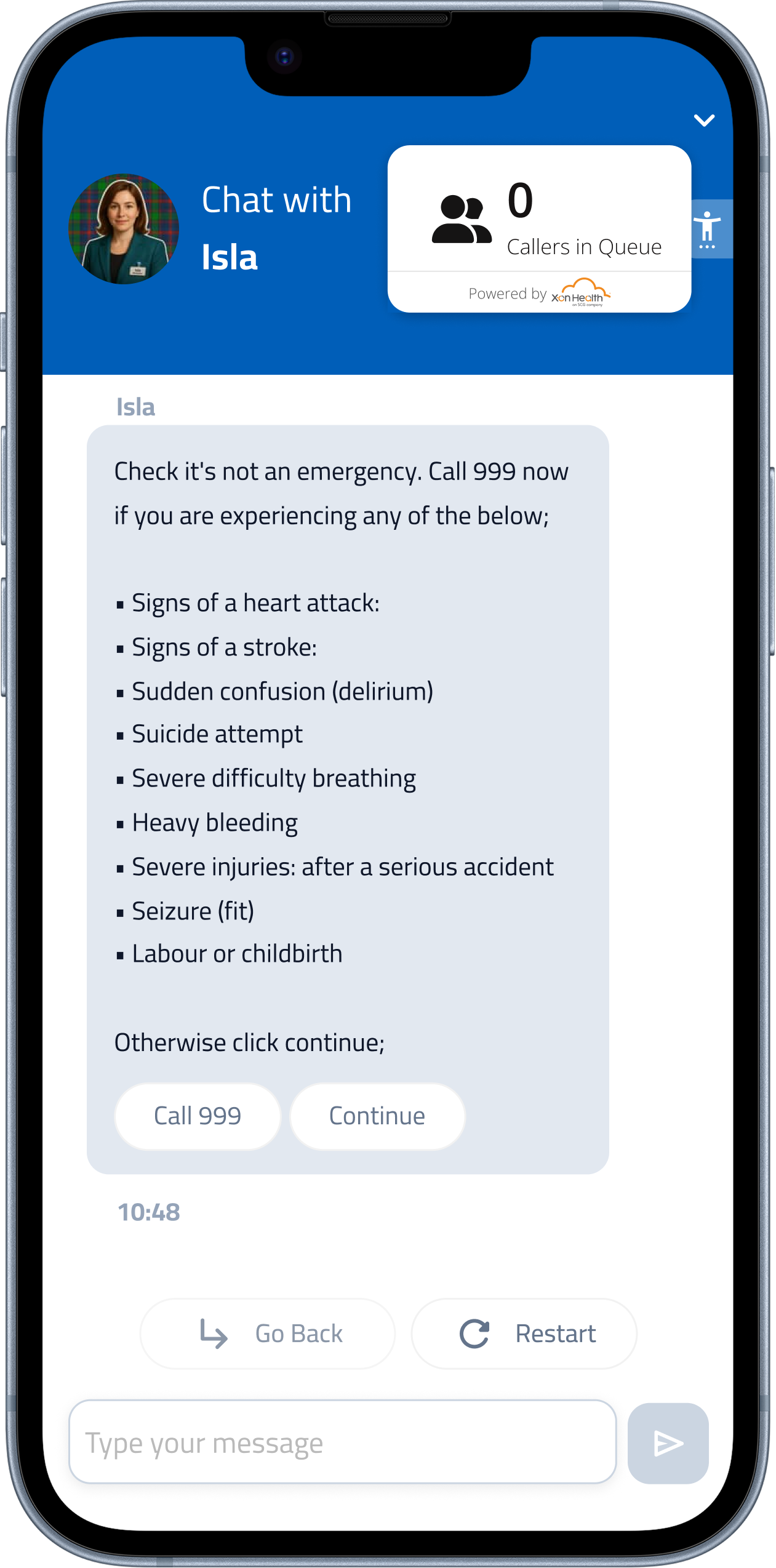
Click the phone screen to interact with our Scottish chatbot, Isla
That creates more joined-up care navigation in Scotland for patients while still allowing practices to retain visibility and control over incoming demand.
This matters because digital transformation often fails when new technology simply adds another layer onto existing processes. Patients do not think in terms of systems or programmes. They simply want a clear route to help.
The practices that benefit most from digital access are likely to be those that focus less on adding channels and more on connecting them together.
Building the future of care navigation in Scotland
Scotland’s digital primary care landscape is still developing, and there is uncertainty around how future funding timelines may align with upcoming national programmes and elections.
However, practices are unlikely to benefit from waiting for every policy detail to be finalised before modernising access. Historically, NHS Scotland has supported practices that move towards nationally aligned digital services, even where funding arrangements follow later.
More importantly, the operational pressures already exist now.
Patients increasingly expect flexibility in how they access care. Staff need clearer visibility of demand across channels. Practices need systems that reduce duplication rather than creating more administrative work.
That is why intelligent care navigation in Scotland matters for a sustainable front door to primary care.
The long-term goal should not be a collection of separate digital tools operating independently. It should be a model where voice access, online requests, practice workflows and national platforms work together as part of one joined-up experience.
MyCare.scot is an important step forward for Scotland’s wider digital health strategy. The next challenge is ensuring practices can connect into that ecosystem in a way that genuinely improves access for patients and reduces pressure for staff.
Better access is not created by offering more ways in. It comes from helping patients reach the right outcome more clearly from the start.
Support better care navigation in Scotland with connected systems that guide patients to the right outcome first time.