

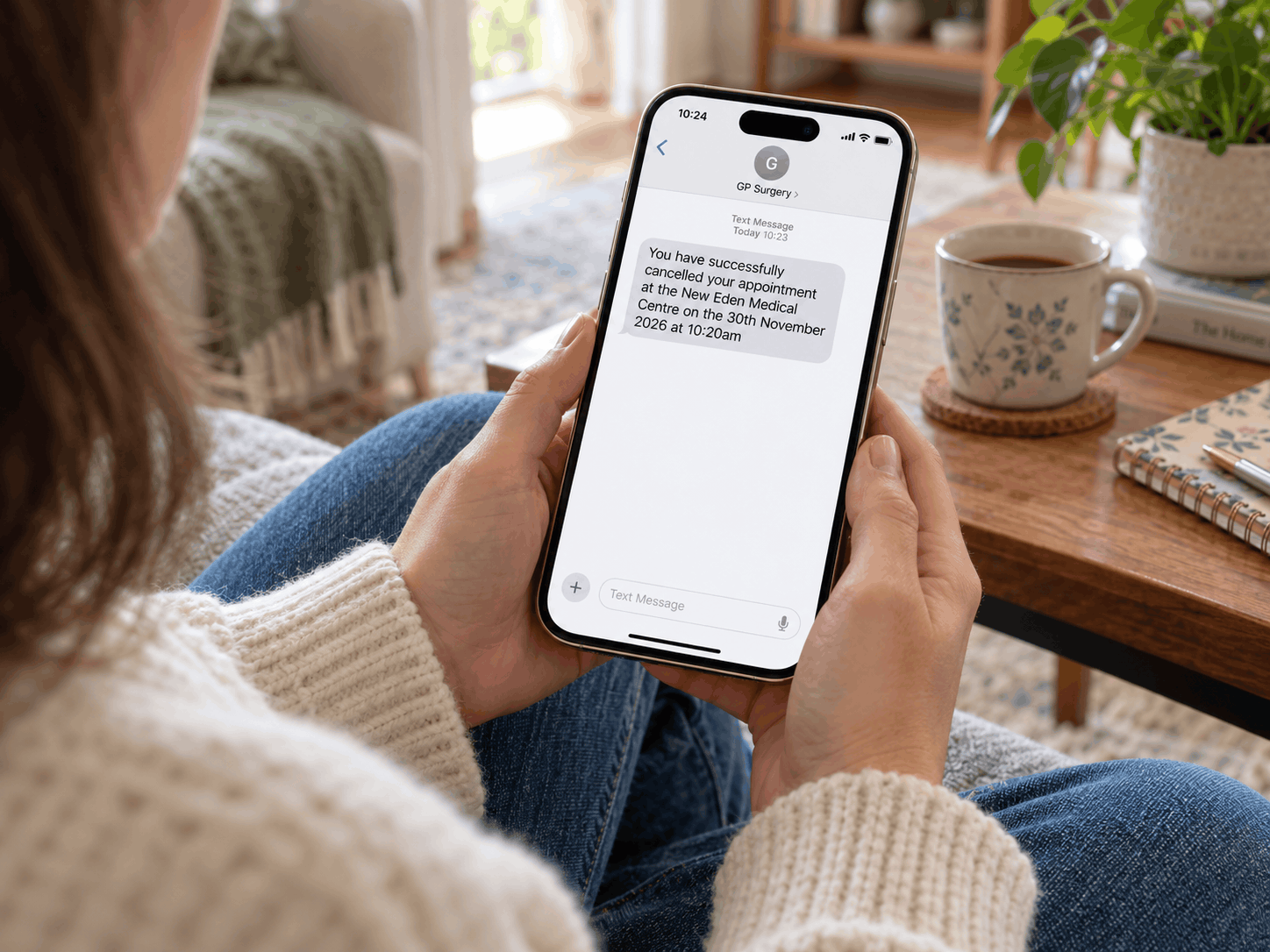
A GP practice can do everything it reasonably can to remind patients about their appointments and still lose valuable clinical time.
Not every missed appointment happens because someone forgot.
A patient may try to cancel but struggle to get through on the telephone, find their booking message or navigate a digital service. The practice never receives the cancellation, and the appointment goes unused.
But even when a patient successfully cancels, there’s another challenge: can that appointment be offered to someone else?
To reduce missed GP appointments and recover capacity, practices need to make it easier for patients to give appointments back and ensure those appointments can be reused.
Why missed appointments aren’t always a patient-engagement problem
NHS England’s updated You and your general practice guidance encourages patients to cancel appointments as early as possible when they no longer need them.
It’s an important message. But responsibility doesn’t sit entirely with patients.
Someone may genuinely intend to cancel, only to find that the process is more difficult than expected. Telephone queues, unclear online routes and missing booking details can all get in the way. To reduce missed GP appointments, we need patients to give appointments back. But have we made it easy enough for them to do so?
Make cancelling an appointment as easy as booking one
Practices have invested considerable effort in making it easier for patients to book appointments. But cancellation routes don’t always receive the same attention.
Consider a patient who knows the evening before an appointment that they can no longer attend. They want to tell the practice. But the telephone lines are closed, the website doesn’t make cancellation obvious and their original appointment message offers no clear next step. By the following morning, there may be far less opportunity to offer that appointment to someone else.
One practical way to reduce missed GP appointments is to review the cancellation experience across different channels:
- SMS: Can patients respond to a reminder or follow a clear cancellation link?
- Telephone: Can they cancel without waiting to speak to reception?
- Website: Is the cancellation route easy to find?
- Digital services: Are patients directed to the correct options without having to navigate multiple systems?
Providing equitable access in general practice means accommodating for those who cannot or prefer not to use digital services. For example, a Check & Cancel feature allows patients to check and cancel eligible appointments through the telephone system without needing reception staff to handle the request.
The principle is simple: if a patient wants to give an appointment back, the process shouldn’t make them think twice.
Reduce missed GP appointments with reminders patients can act on
There’s a difference between reminding someone about an appointment and giving them an opportunity to respond.
Compare:
Reminder A: You have an appointment at 10:30am on Thursday.
Reminder B: You have an appointment at 10:30am on Thursday. If you can no longer attend, here’s how to let us know.
The second helps reduce missed GP appointments by making cancellation part of the normal appointment process.
But timing matters. A reminder sent shortly before an appointment may prompt attendance but leave little time to reuse a cancelled slot. An earlier reminder creates more opportunity to act, although it may be less effective as a final prompt
Are your reminders designed to encourage attendance, enable timely cancellations, or both?
Automated voice agents for outbound appointment reminders can also help. They can contact patients, verify their identity and capture whether they intend to attend or need to cancel, reducing manual work for reception teams.
EARLY ADOPTER OPPORTUNITY
Help us reduce missed GP appointments
We’re looking for GP practices to be early adopters of our Appointment Reminders Voice Agent to experience how automated reminders can help reduce DNAs and ease reception workload.
Meanwhile, features like Surgery-Led Appointment Booking use secure, personalised SMS links to help patients respond to appointment invitations without needing to call the practice.
These tools address different stages of the appointment journey, but both support clearer patient responses without requiring staff to manage every interaction. The question is whether those responses arrive early enough to make a difference.
A cancellation only creates capacity if the appointment can be reused
Making cancellation easier solves one problem. It doesn’t automatically solve the next. A cancelled slot still needs to be identified, made available and offered to a patient who can use it.
An appointment cancelled the previous afternoon gives the practice a different opportunity from one cancelled five minutes before the consultation. Both are cancellations, but only one may leave enough time to offer the appointment to someone else.
Reducing DNAs, increasing cancellations and recovering usable appointment capacity are not the same thing.
A practice might record fewer DNAs because more patients are cancelling. But if those cancellations arrive too late, the amount of clinical time recovered may barely change. Even an early cancellation doesn’t guarantee another patient can take the slot. The appointment must be appropriate for their needs, and they must be available to attend.
To reduce missed GP appointments and recover more capacity, practices should ask:
- How quickly do cancelled appointments become available?
- Who is responsible for reallocating them?
- Which appointment types can realistically be offered at short notice?
The goal isn’t simply to improve DNA figures. It’s to give more patients the opportunity to use available appointments.
What is your DNA data really telling you?
A falling DNA rate is encouraging. But are more patients attending, more cancelling, or both? And how many cancelled appointments are actually being reused?
Looking beyond headline GP appointment data can help practices understand what the figures don’t immediately reveal. For missed appointments, that means identifying where changes might make the greatest difference.
- Appointment type: Are DNAs more common for certain consultations?
- Booking lead time: Are patients more likely to miss appointments booked further in advance?
- Reminder timing: Do reminders give patients enough time to cancel?
- Cancellation timing: How much notice does the practice typically receive?
- Recovered capacity: How often are cancelled slots booked by another patient?
Practices looking to reduce missed GP appointments don’t necessarily need complicated reporting. A focused review of one appointment type or reminder workflow can provide useful insight.
For example, a practice might make cancellation instructions more prominent, then examine whether patients begin cancelling earlier and whether more returned appointments are reused. If cancellations increase but capacity doesn’t improve, that question becomes: where is the opportunity being lost after the patient cancels?
The answer may lie in how returned appointments are managed, rather than how patients are reminded.
Are fewer DNAs leading to more appointments being used?
Reducing missed GP appointments isn’t simply about expecting patients to remember or attend. It’s about making cancellations straightforward, encouraging earlier responses and ensuring returned appointments have the best chance of being reused. Self-service can reduce avoidable calls to reception, while keeping human support available for patients who need it. But a falling DNA rate alone doesn’t prove that more patients have been seen.
If your DNA rate fell next month, would you know whether more appointments were being used, or simply that more unused appointments were being recorded as cancellations?
That’s the real measure of progress: not just fewer DNAs, but better use of the appointment capacity practices already have.
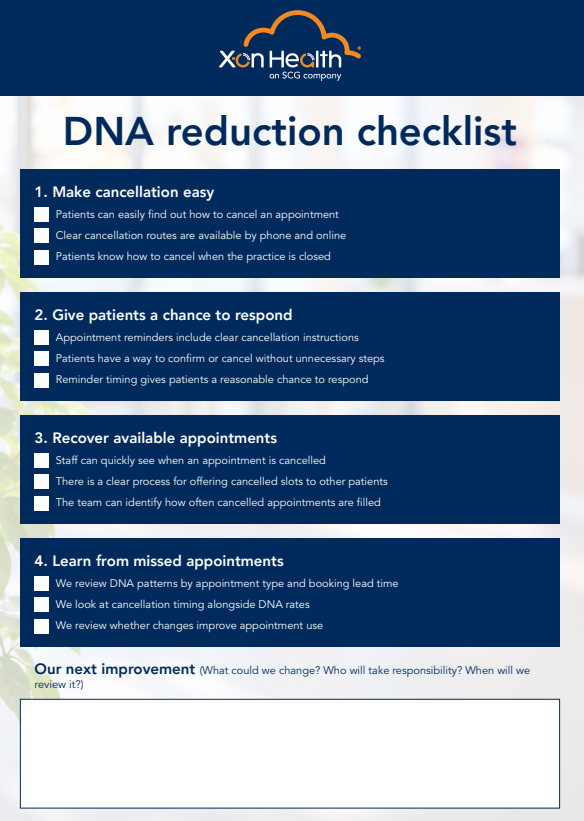
Reduce missed GP appointments with our practical checklist.
Making it easier for patients to cancel is only half the challenge. Practices also need to ensure cancelled appointments can be offered to someone else.
Download our DNA reduction checklist to review your cancellation routes, improve appointment reminders and identify opportunities to recover valuable appointment capacity.